
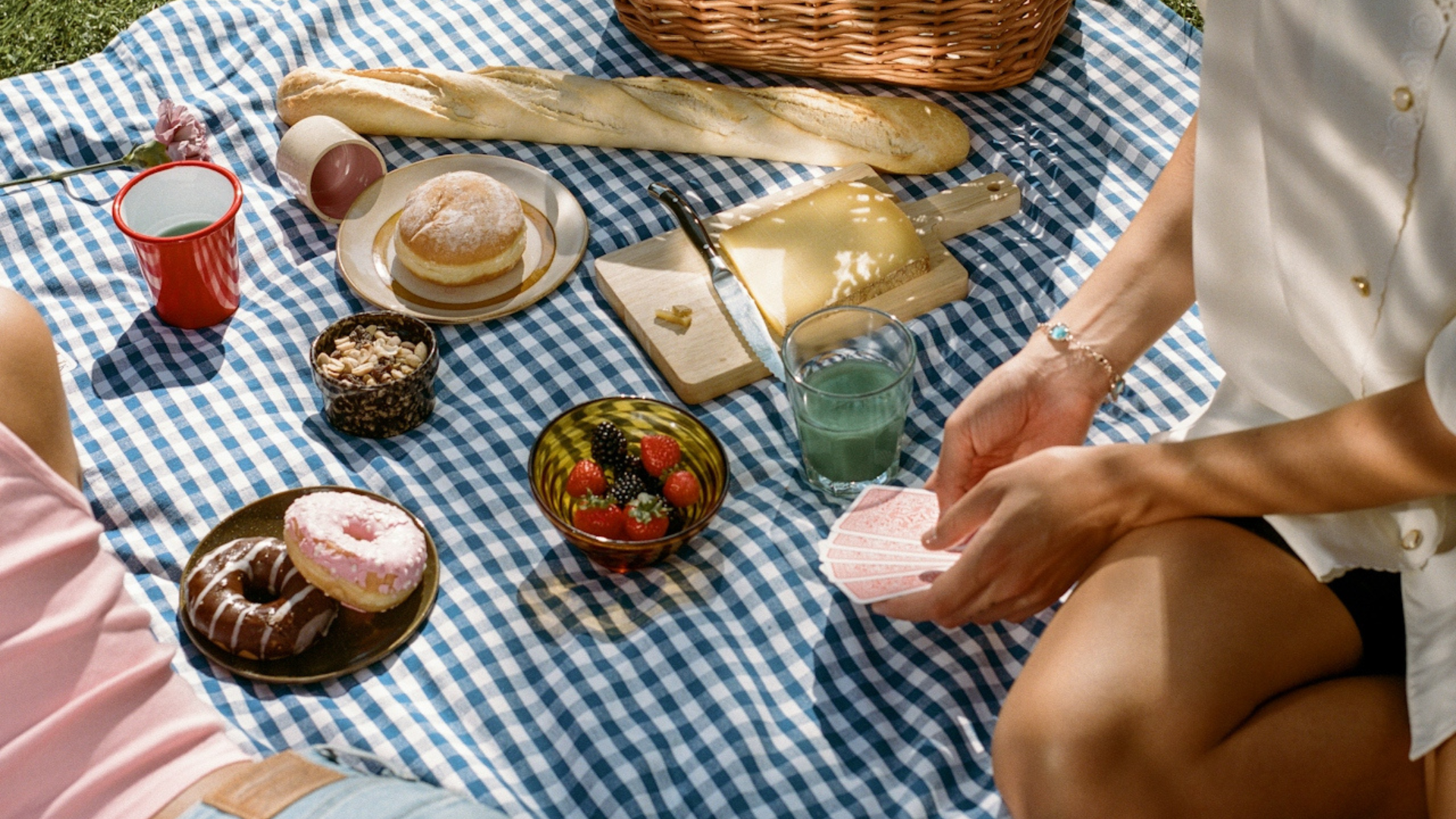
“Tell me what you eat and I will tell you what you are”, or “Dis-moi ce que tu manges, je te dirai ce que tu es”, because everything sounds classier in French.
When French lawyer Anthelme Brillat-Savarin first wrote the phrase in 1826, he was not thinking of chasing clout on Instagram and TikTok with an iced matcha latte in hand and doing a grocery haul.
His original message was one of saying that the food you consume has a direct correlation to your health and wellbeing, and whilst this still rings true to an extent, we’re now in a world where what you eat has a direct correlation to cultural capital, online trends, and social identity.
So, how do you break into the food and drink market in 2026? How do you position your brand? Do you want to be the luxury indulgence of Ferrero Rocher? Or the witty, irreverent Liquid Death? Do you want to go viral on TikTok? Or have your product end up on a runway?
It’s time to enter the Wild West of food and drink branding.
Key Takeaways from Gen Z Food Trends
Research company, Attest, surveyed 1,000 Gen Zers aged 18 to 27 and found that:
• 70% value sustainability; 61% will pay more for ethical food.
• 85% have tried at least one viral food trend.
• 65% say Gen Z cares more about food health than other generations.
• TikTok, YouTube, and Instagram are major channels for food discovery.
• Taste and price still matter most, but wellness and ethics are rising fast.
Food is Fashion Now
Hellman’s Mayonnaise featured at London Fashion Week, glazed doughnut skin, and luxury brand Loewe, with its love affair with tomatoes – it’s fashion darling.
We have Gen Z to thank (or curse) for this. $20 Erewhon smoothies, $4 cans of Liquid Death water, this is the generation looking to signal status or enhance their everyday in a challenging socioeconomic time. According to Sydney Stanback, head of global trends and insights at Pinterest, “Gen Z is craving sensory-based experiences – it’s not just about how something looks, but also how it tastes and feels”.
Food brands and fashion brands both thrive on multi-sensory storytelling, merging taste, touch, and visual appeal. This comes together to enhance a product’s emotional appeal.
Experiment with new things, take your food product off the table and put it where no one expects to find it. Form an entire world or personality around your product – what type of person eats this? What else do they care about? Is your product for the It Girls or the Outcasts? It’s no longer just a healthy snack; it’s for those who get up early, go to the gym first thing in the morning, who have their life together, and who get a kick out of showcasing their health and wellness. They have Korean skincare and a gua sha in their bathroom; you get the picture.
Food is also Functional Now
Not just in the sense that if you don’t eat breakfast, you might pass out at work – food now acts as a tool for optimisation and self-care.
According to Matthew Barry, insight manager for food and beverages at research company Euromonitor, “This stems from consumers feeling that the world is out of control. If the world is becoming more chaotic and you can’t trust the people in charge, what do you do? Focus on what you can control, and don’t just control, but optimise”.
Functional foods, those enhanced with scientific advancements to offer specific health benefits, are at the forefront. Think supplements, prebiotics, protein enhancements, and ingredients for cognitive benefits.
Whilst some people love the signalling of being seen consuming functional foods, there is a line to toe of potentially putting off customers if you over-market your product as a functional food. Some consumers might believe it will not be tasty or feel like ‘diet food’, something they don’t want to buy into.
Girl Dinner, or Escaping Traditional Boundaries
Cereal for breakfast, sandwiches for lunch, a full meal for tea (or dinner). It all gets a bit boring and samey after a while.
We’re now seeing a rise in “unserious” food and drink, says Jennifer Creevy, director of food and drink at trend forecaster WGSN “This reflects a need for irreverence, silliness, and fun to counterbalance the anxiety and stress of the polycrisis”.
People are rewarding themselves more with a sweet treat to get through the day, and old, traditional meal formats are moving to the side to make way for “Girl Dinner”.
Push the boundaries, embrace whimsy, and consider things that people actually want to consume as opposed to what’s always been consumed in the past. If I want cold leftover pizza for lunch, I will have it. If I want to eat chocolate-covered popcorn in bed after a long day of work, I will. If I want to eat half a gateau cake, unsliced out of the box with a fork whilst struggling to write an essay for uni, I will.
Going Exclusive
Culinary hotspots that have gone viral online are now a new form of cultural capital. We see this kind of exclusivity in two different types of eateries, type one being the place with a queue constantly out the door and you can’t get a booking for months, type two being the place with a changing menu or dining experience, and you have to get it before it’s gone.
Examples of this include popular YouTube group The Sidemen’s fried chicken restaurant chain ‘Sides’, where The Sidemen were actually warned off attending their own opening due to the large crowds and safety concerns. Another example is the restaurant chain Six by Nico, which specialises in six-course tasting menus that change every six weeks.
No matter the industry or product, scarcity, hype, and the creation of an experience sell.
Sustainability & Food
Over 70% of Gen Z consumers are willing to pay more for sustainable products. This is the consumer generation of checking packaging, sourcing practices, and brand values – no more greenwashing.
Gen Z are looking to reduce waste and turn to eco-friendly packaging. Whilst boomers are working hard to burn through fossil fuels and drop bombs around the world, Gen Z are looking to save the planet. How does that paper straw taste?
On top of this, there’s a growing demand for locally sourced ingredients and products that support regional food systems. Gen Z wants transparency around supply chains, ingredient sourcing, and environmental impact.
Your product might taste great, but we don’t want to eat microplastics and exploit cheap labour. There’s no space for those products on Gen Z’s plates, or runways.
Understanding the cultural and societal shift in food perception and morals is key for any brand looking to either break into the market or keep up with the current climate. It’s now about working with the consumer rather than just selling to them. Try new marketing strategies, show up in unconventional places to create a cultural moment. Lean into what Gen Z expects of a brand, to be culturally aware and environmentally conscious. Work with them, not against them, by adapting to the shift in dining habits.
The youngest members of Gen Z are currently 14, but this up-and-coming generation will increase their purchasing power and have the greatest impact on the food industry. Adapt, but do it sincerely – no greenwashing, no inauthentic AI usage and assets, and no trend hopping.An exploration into the resurgence of physical media, aestheticism, and cultural capital.