
Social Media Trends & Aesthetics: Physical Media
I recently bought a small indie “zine” from an independent creator that I saw advertised on LinkedIn. She was advertising it herself as a new passion project, and I came upon it completely by random chance. The zine, titled ‘Earwyrm’ encompassed all things gothic with a focus primarily on music, with band interviews, book recommendations, imagery to cut out and create your own collage with, and an interview with an artist. It cost me £13.80, including shipping, and arrived in a little envelope through the front door a few days later.
Getting home from work and seeing that delivery, opening it, and sitting down to read my little A5 zine was fun. I felt like how I had as a child going to big Tesco for the weekly shop with my parents and picking up the latest issue of ‘The Beano’ or ‘The Dandy’. As a child, I had stacks upon stacks of them – including the annuals – that I would spend time pouring over and rereading. Then one weekly shop trip to Tesco I stopped. I didn’t pick up the latest issue. I went home empty handed by choice. I could get my entertainment elsewhere, I could go online and watch YouTube or see what others in my school year were posting on social media. In fact, I think this was where I fell out of love with reading. I just stopped. I didn’t consume books or magazines or any long form written content.
But back to me and my new little zine that I read lying under a cosy blanket. This was a wonderful experience. Holding something physical in my hands, turning each page, flicking through to look at the design and images – it was great. This brings me to the point of my nostalgic ramble, physical media.
My inspiration for the deep dive came from a variety of places: my experience with my new zine, a “zeit” about physical media on the website ‘deathtothestockphoto.com’ (great name), and my own degree being a combined one in Linguistics and Media. Over the years my interest in media theory, and even sociology, has grown and I am able to look at it in practice through my career in marketing.
The zeit on physical media on ‘deathtothestockphoto.com’ makes the argument ‘from obsolescence to objet de la resistance, physical media is back’ and I agree.
The Renaissance of Physical Media: Reclaiming Ownership
When Netflix first turned to a streaming platform full-time in 2007 instead of DVD-by-mail rental service, it blew up. In a positive way. It worked its way into popular culture and also meant the birth of the expression “Netflix and chill”. Netflix was great, watch what you want, when you want, without the ads of typical satellite TV. If you had Netflix at your house, you were somebody. If you didn’t have Netflix, you’d be left out of the conversations surrounding Netflix’s original productions, both films and TV shows. You see here the connection of media and society, media and ‘taste’, media and status.
However, the discourse surrounding Netflix and streaming services is changing. Repeat price hikes, the promises of delivering more value to consumers by ‘reinvesting to further improve Netflix’ feel empty as shows are continuously cancelled. In fact, 22 shows were cancelled by October in 2025 alone. In 2020, Netflix cancelled 18 of its original series, of those 14 only had one season. For non-Netflix original series, Netflix must keep renewing a license to stream the show or film on their platform, when Netflix decides to stop paying, you lose your ability to have access. That comfort show you love to have on in the background as you cook? Gone.
As digital streaming platforms remove and alter content due to licensing or financial reasons, a major driver for the return to physical media is the desire for permanent ownership. This shift challenges the theoretical assumption that the digital future makes physical ownership irrelevant. As ‘deathtothestockphoto.com’ says, ‘A new generation is turning to DVDs, records, and zines as acts of preservation and self-definition’.
The Renaissance of Physical Media: Books
It’s good news for authors, books, and zines, as book sales are on the up and up. The cause of this surge? TikTok, or “BookTok”, used by those in the digital sphere to refer to any videos and creators who create book related content. (We see this with other online communities such as “CarTok”, “TechTok”, “TravelTok”, “BeautyTok” and so on). According to Tom Tivnan, in his article for the Writers’ & Artists’ Yearbook 2026, ‘just over £552m worth of fiction was shifted through industry sales monitor Nielsen BookScan in 2024, obliterating the record set in the previous year by some £50m’. In fact, the ‘5 best-selling books in Britain in a calendar year were all fiction, as were 9 of the top 10, and 32 of the top 50’. The genres that get the biggest boost out of TikTok fame include science fiction & fantasy, romance, horror, and crime. They all hit record or near-record levels in 2024 and have gone into even better shape in 2025. Bookstores themselves acknowledge this success in book sales due to TikTok and even go as far as to have table displays dedicated to “BookTok”. Interesting how digital media has helped to boost physical media.
In 1997 the E Ink Corporation was established and led to the development of “electronic paper”, a technology which allowed a display screen to reflect light like ordinary paper without the need for a backlight. The first batch of commercially available e-readers, including the Rocket eBook developed by NuvoMedia in late 1998, failed to gain a form of widespread use and acceptance. Fast forward to 2004 and the first e-reader using “electronic paper” was released, the Sony Librie, followed by the Sony Reader in 2006. Both then overshadowed by the Amazon Kindle in 2007 when it sold out in 5 and a half hours.
In 2009, new marketing models for e-books were being developed and a new generation of reading hardware was produced. According to an IDC study from March 2011, sales for all e-readers worldwide rose to 12.8 million in 2010; 48% of them being Amazon Kindles. Overall, the introduction of the e-reader brough substantial change to the publishing industry and also saw rise to predictions that physical books and print periodicals would soon disappear.
But physical books have prevailed. I look to my own stacked bookshelves where there is realistically no more room and yet I am still working to squeeze another book onto them, double stack, triple stack, I’m trying them all. However, reading and collecting physical books isn’t just a fight against digital media and companies’ abilities to simply make content disappear. Physical media is now back-in-fashion in interior design, media as décor if you will.
The books on your shelves, how you display them, how you decorate your bookshelves, it all comes back to aestheticism. Do you truly support a fight against companies erasing catalogues and having control over your ownership or are your bookshelves a status and vanity point? Are you too preoccupied in how others perceive you to get through that ever-growing TBR pile? The décor we display in our home is a reflection of ourselves, it demonstrates our tastes, preferences, whether we prefer practically over aestheticism.
I see across the internet people doing massive book hauls or showing off their stacked shelves and announcing a TBR (to-be-read) list in the 100s. It’s not realistic, it’s not sustainable, but it certainly gets clicks and views. I feel we can break the online book-reading community into a few groups: those who actively read and enjoy it, those who are aware books are the ‘it’ thing at the moment and it’s a hot topic/trend to jump on, those who use books as a symbol of superior intellectualism (whether they have read them or not) and will showcase their collection of dense classics, philosophy, poetry, and more. Although, who am I to yuck anyone’s yum? Especially if means indie bookstores are getting more support and funding, how anyone chooses to consume is not for me to say.
There are more groups to be explored here but these I feel are most pertinent to the discussion of physical media, aestheticism, and trends.
I think here is a good point to broaden the discussion to encompass other forms of physical media to address the issues of trends, aestheticism, and “cultural wealth”.
Trends, Aestheticism, and Cultural Wealth
When I talk about cultural wealth, I’m referring to the theory that sociologist Pierre Bourdieu coined, the Cultural Capital Theory. It refers to the non-financial assets that help people succeed in society, such as education, language, style, or cultural knowledge. There are 3 forms of cultural capital:
• Embodied Cultural Capital: This refers to the dispositions of the mind and body. An example is regional dialect, which is internalised and expressed through an individual’s speech patterns and way of being. It can also include your tastes in music, food, and fashion.
• Objectified Cultural Capital: This includes material possessions that signify cultural capital. Examples include works of art, books, or musical instruments. These are physical objects that an individual owns and can use to demonstrate their cultural knowledge or taste.
• Institutionalised Cultural Capital: This category encompasses academic credentials. Degree and qualifications are institutional recognitions of an individual’s cultural knowledge and competence.
In this exploration of physical media, the focus is of course on objectified cultural capital. Being able to own the objects that are “in fashion” or “trending” is a sign of cultural capital. This is nothing new and has been going on since time immemorial. If owning physical media is now in fashion, those who care most about their societal image will buy the books to fill their library, splash out on a new record or Hi-Fi system, and so on.
This is no different to the medieval lord who would buy fine fabrics, jewellery, precious metals, and expensive weapons. Portraits created of Kings and Queens displayed their wealth and status through the clothes worn and symbolic images included in the painting alongside them. It’s about scale of impression. Are they really a ‘better’, ‘elevated’ human being or do they just like to have lots of stuff? History proves that the very ordinary can command immense influence when surrounded by extraordinary aesthetic. This takes us into an argument of power and ownership and media which can be a whole other kettle of fish.
So, how can we link what’s trending on socials to cultural capital and aestheticism?
In their zeit on physical media, deathtothestockphoto.com highlights the following:
Trending On Socials: The Spine Post
‘A new format of recommendation is emerging on social media: users post the spines of the films, albums, or books they’ve consumed neatly stacked. The image functions as both a review and credential, granting some level of authority through ownership through ownership and the act of making space for media within the home.’
Trending On Socials: Shelf Aesthetics
‘Bookshelves show intellect, now DVD shelves signal taste. Colour-coded spines and Criterion stacks become backdrops for self-portraiture.’
Concept: The New Librarian
‘Young collectors take on curatorial roles once reserved for archivists, treating their shelves as both private museum and public service.’
All 3 of these ideas work on the perception of the self from others point of view. Your “spine stack” showcases your objectified cultural capital, even more so if you pack it full of dense classics and “highbrow” literature. Having your densely packed bookshelves behind you in photos or videos must clearly make you a more intellectual person than the next. How you choose to curate your personal library or books or DVDs signals your level of cultural taste.
Cultural capital can be a difficult thing to hold on to. What is in high fashion and regarded as “above the rest” can just as easily become cheap. A historical example is pale skin. The aristocrats of days past prized delicate, pale skin as it meant they didn’t have to toil in the sun working the fields all day, it showed their wealth and status. Fast forward several centuries and having a glowing tan is now in as it signifies that you have the money to go abroad to other countries and travel to see the world. A more modern example being how the wealthy could afford designer brands that would showcase logos loud and clear to display this status of owning Gucci, Prada, and so forth. Now, this overt display comes across as gaudy and the rich and fashionable opt for something more subtle and muted.
Books, CDs, DVDs, vinyl, and digital cameras might be in now, but how long until people look back at this time and question us for hoarding “useless junk” and instead showcase the latest technology for streaming music, watching films, and reading. Audio books are already on a steady increase; how much further will the technology go?
Digital Media x Marketing
So, from a business’s or a marketer’s perspective, how can we implement this physical media renaissance going forward?
Let’s bring back tangibility in marketing. Create a physical magazine showcasing your products and brand, offer products embracing the physical media comeback like CD cases or DVD/media storage towers, include stickers or postcards in deliveries. It’s an opportunity to really get creative with your marketing.
Make your PR or regular delivery packages something special, let’s bring back un-boxing videos, personalise with handwritten notes, release your indie film on DVD rather than streaming services. All it takes is a little extra thought, turn the router off for the day and see what you can come up with.
Holding On To Media
There’s something unique about being able to hold something in your own hands. Studies have found that touching an object metaphorically translates into a perceived mental connected towards it. Our stuff becomes an extension of the self. In a 2010 study where participant’s brains were scanned when interacting with objects, ‘areas of the brain that are known to be involved in thinking about the self also appear to be involved when we create associations between external things and ourselves through ownership’ (Kim & Johnson, 2010). Maybe this is why it stressed me so much in secondary school when someone would borrow a pen and not give it back.
After so many years of streaming, many are now rediscovering the comfort of tangibility. This takes me nice full circle back to my little A5 zine. Something that I took for granted, holding a physical magazine, as child had now become a novelty.
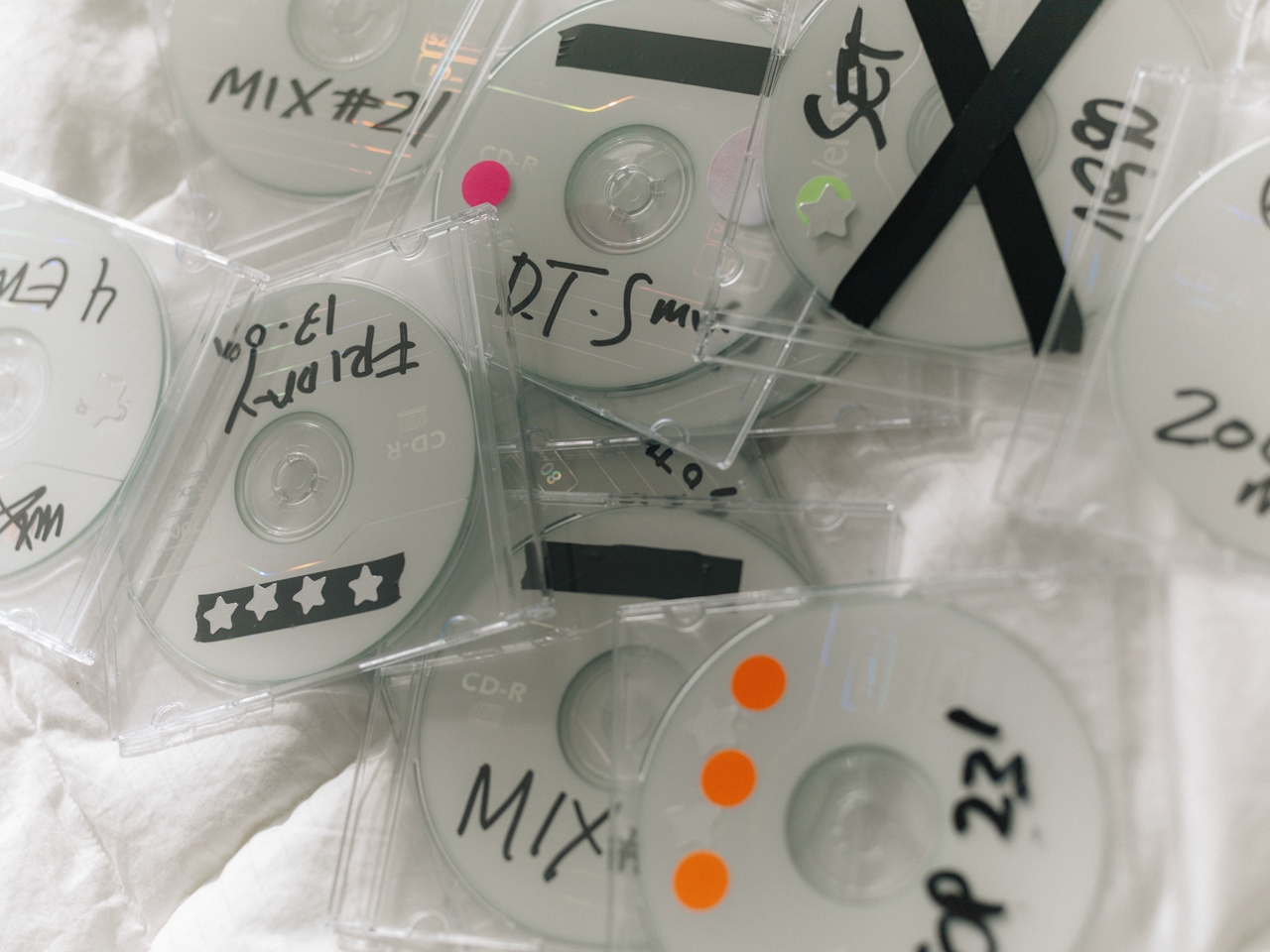
I am, by no means, against digital media. You will have to pry my Spotify premium subscription from my cold, dead hands. I do, however, love the resurgence of physical media. I have my own mini library, I own a record player and a small collection of my favourite albums on vinyl, I have DVDs of my favourite films and TV series. I even brought two CDs from my favourite band recently for the sole reason they’re signed and contained hand-written notes, I can’t get my Spotify playlist signed.
Whether it’s a genuine love for physical media or hopping on a big internet trend, I am glad to see bookstores doing well, independent record stores being populated by Gen-Z, and charity shops being searched for that one special movie on DVD. It’s time that physical media had its own moment and I encourage both companies and consumers to embrace it.